- Overview
- Legends
- History
- The hill, the steps and the ways up
- Worship and traditions
- The idol replacement controversy
- How to reach
- Festivals
- Photos
- Timings
- Questions
- Sources
Overview
The Dhandayuthapani Swamy Temple stands on Sivagiri, the higher of the two hills of Palani, in Dindigul district. It is the third of the six Arupadai Veedu temples. Tamil Nadu Tourism describes it as one of the richest temples in India.[1][2][4]
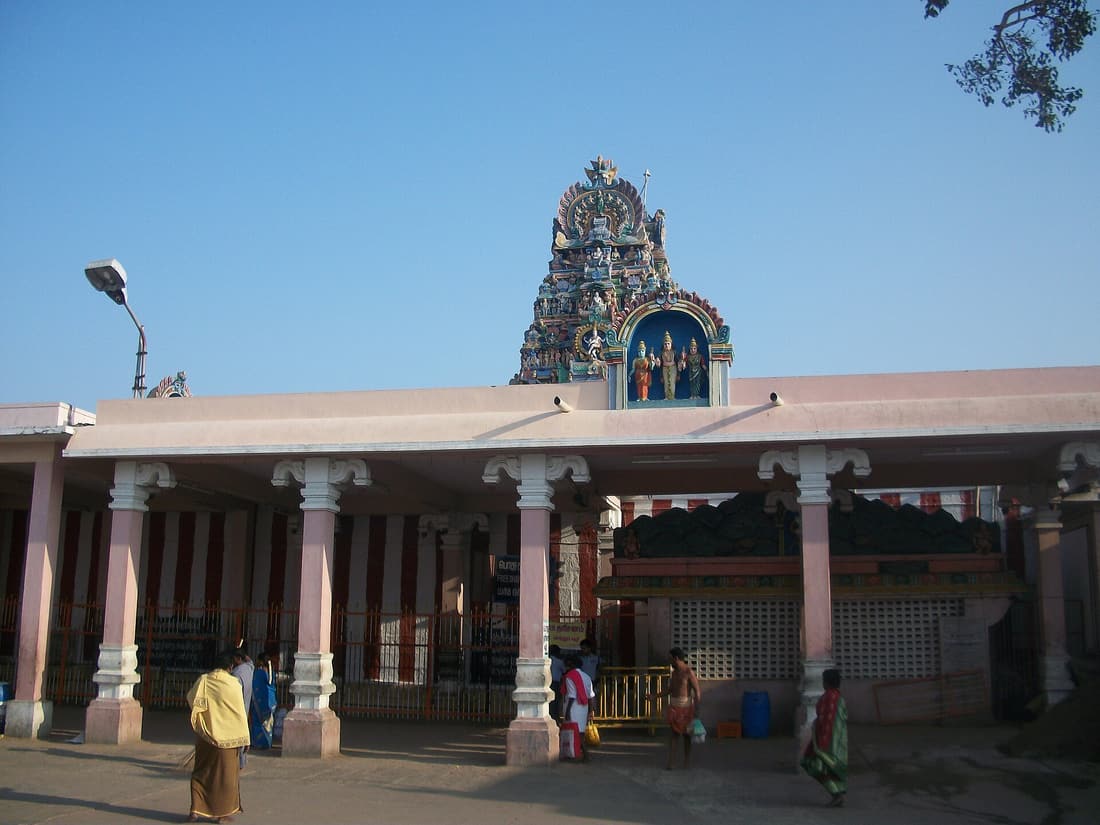
The idol shows Murugan as a young recluse, shorn of hair and in a loincloth, holding a staff. The sanctum is in the early Dravidian style, and the covered ambulatory shows Pandyan influence. A gold-plated vimanam with carved deity sculptures rises over the sanctum, and the walls carry many old Tamil inscriptions.[1]
Legends
The fruit of knowledge
The sage Narada gave Shiva a gnana-palam, a fruit of knowledge. Narada said it could not be divided, so it would go to whoever first circled the world three times. Murugan set out on his peacock, but Ganesha circled his parents Shiva and Shakti, arguing that they were the whole world, and won the fruit.[1][2]
Murugan felt cheated, left Kailasa, and settled in the Palani hills as a hermit, wanting to outgrow his boyhood. The staff-holding ascetic form of the idol reflects this.[1][2]
Idumban and the two hills
The sage Agastya had the asura Idumban carry two hills, Sivagiri and Sakthigiri, south to balance the tilt of the earth. Idumban rested, could not lift one hill again, fought a youth on it, and lost. Agastya identified the youth as Murugan, and that hill stayed at Palani. Wikipedia says the story may have inspired the kavadi practice.[1]
Bogar and the Navapashanam idol
Tradition holds that the Siddhar Bogar created and consecrated the main idol from nine ingredients (navapashanam). Tamil Nadu Tourism dates this to between 550 and 300 BCE, a claim that is flagged and not independently confirmed. Wikipedia says a legend links a tunnel from the Bogar shrine to a cave where he still meditates.being verified[1][2]
History
The hill is called Thiruaavinankudi in the Sangam text Tirumurukarruppadai. The region is placed in Vaiyapuri Nadu (Kongu Nadu) in Sangam texts. Wikipedia says the Cheras ruled from the late 1st century CE, and tells that a Chera king, taking refuge at the hill's foot, found the neglected idol after Murugan appeared to him in a dream.[1]
Tamil Nadu Tourism says the temple was built between the 2nd and 5th centuries CE by Cheraman Perumal of the Chera dynasty, and that the Cholas and Pandyas added mandapas and gopurams. Wikipedia says the Cholas expanded the temple from the 10th century CE, and records Pandya inscriptions of Jatavarman Sundara Pandyan I and Jatavarman Vira Pandyan II (13th century). Maravarman Kulasekara Pandyan I gifted a village in 1300 CE.[2][1]
The Vijayanagara rulers patronised the temple from the 14th to 16th centuries, after which the Madurai Nayaks ruled and the temple was placed under the Palayakkarars of Balasamudram. The 15th-century poet Arunagirinathar visited Palani and composed hymns in the Thirupugazh.[1]
The hill, the steps and the ways up
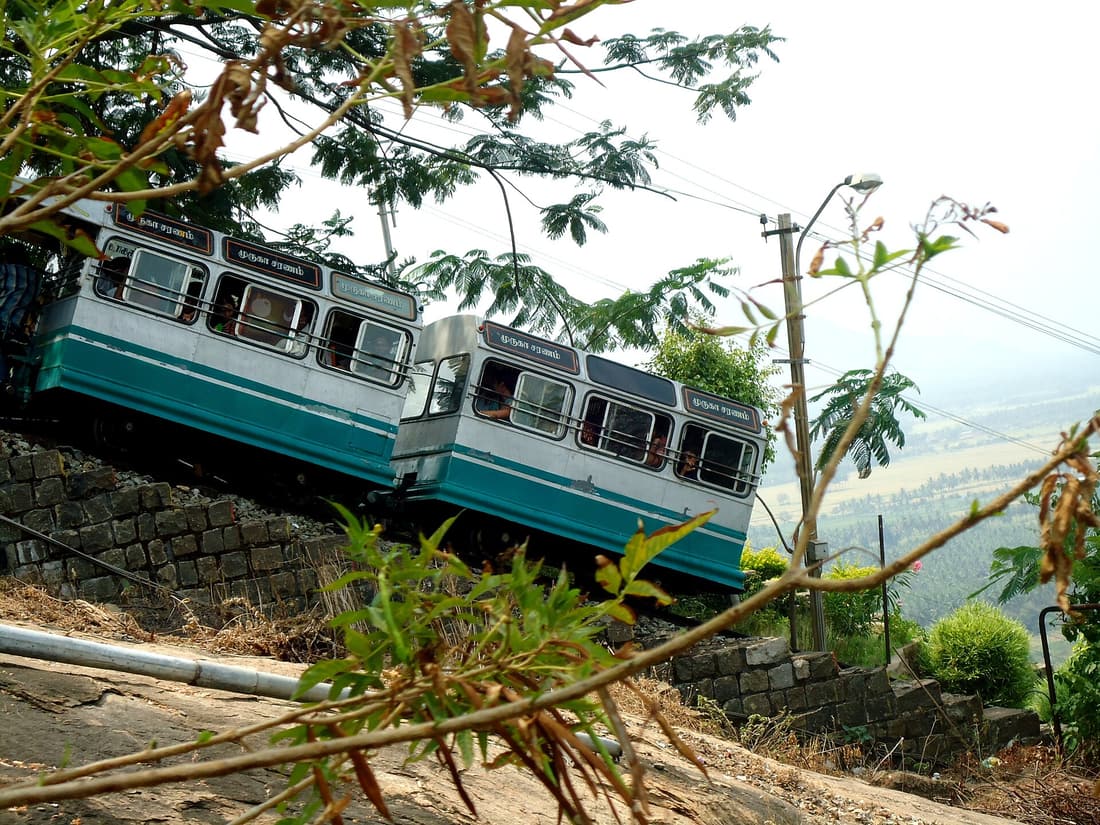
Devotees can climb the staircases cut into the hillside, take the gently sloping elephant path, use priests' stairways, or ride the winch or rope car. Wikipedia says three winch tracks were laid in the late 20th century, and the rope car was added in 2003 and upgraded in 2018 to carry 1,500 people an hour.[1]
Tamil Nadu Tourism gives the number of steps as 670, a figure that is flagged because Wikipedia gives none. The elephant path has restrooms, benches and drinking water.being verified[2][1]
The first prakaram has minor shrines to Shiva and Parvati and a Bogar shrine. Ganapati's shrine and the chariot houses are in the second precinct. Wikipedia names the Thiruavinankudi (Kulandhai Velappar) temple at the foot of the hill, beside the Saravana Poigai tank, as considered one of the Six Abodes, and devotees usually visit it before climbing.[1]
Worship and traditions
- Wikipedia names four daily pujas: Vizha Pujai (early morning), Ucchikala Pujai (afternoon), Sayarakshai Pujai (evening) and Rakkala Pujai (night, before closing), without giving times. Abhishekam with oils, sandalwood paste, milk and water is the most common ritual.[1]
- In the evenings the idol wears a king's attire (Raja alangaram). At night, accounts are reported to the deity, who is then sung to sleep with a lullaby.[1]
- Tonsuring is a major tradition, in imitation of Murugan's form, after which sandalwood paste is distributed as prasadam. Priests with the hereditary right to approach the idol belong to the Vadama Brahmin community, assisted by Pandarams.[1]
- Panchamirtham, the sweet prasadam of banana, honey, ghee, jaggery, cardamom, dates and sugar candy, is recognised as a Geographical Indication. Wikipedia's lead says five ingredients while the list has seven.being verified[1]
- Kavadi is carried in commemoration of Idumban, in forms such as the theertha kavadi (sanctified water) and paal kavadi (cow milk). Devotees often observe a 48-day abstinence, walk barefoot and bathe in the tank before climbing the hill.[1]
The idol replacement controversy
Wikipedia records that attempts were made in 1984 and 2002 to replace the idol, and that a replacement of 200 kg was consecrated in January 2004 and then removed after opposition. In 2019 Tamil Nadu Police said the new idol had been made in order to smuggle out the old one, and IIT Madras research found it weighed 221 kg and lacked the specified metals, especially gold.[1]
How to reach
- Palani Bus Stand is about 1 km from the temple, Palani railway station about 2 km, and Coimbatore International Airport about 114 km. The town is on National Highway 83 toward Coimbatore, and the station is on the Dindigul-Pollachi line.[2][1]
- Tamil Nadu Tourism gives a toll-free number, 1800-425-31111 (within India only), for general tourism enquiries.[2]
Festivals
Photos
Timings
- Temple: 6:00 AM to 8:00 PM; on festival days it opens at 4:30 AM — Tamil Nadu Tourism [2]
- Winch and rope car: 7:00 AM to 12:30 PM and 1:30 PM to 5:00 PM; on festival dates the winch starts at 4:00 AM — Tamil Nadu Tourism [2]
Frequently asked questions
What is the story behind Palani?
After losing a contest with Ganesha for the fruit of knowledge, Murugan is said to have left Kailasa and settled on the Palani hill as a hermit.[1][2]
How can I reach the top?
By stairs, the elephant path, a winch or a rope car. Tamil Nadu Tourism lists the winch and rope car as running from 7:00 AM to 12:30 PM and 1:30 PM to 5:00 PM.[2][1]
What is the idol made of?
Tradition says the Siddhar Bogar made it from nine ingredients called navapashanam.[1][2]
What is Panchamirtham?
The temple's sweet prasadam, made of banana, honey, ghee, jaggery, cardamom, dates and sugar candy, and recognised as a Geographical Indication.[1]
Sources
- Dhandayuthapani Swamy Temple — WikipediaEncyclopedia (secondary) · accessed 2026-10-31
- Arulmigu Dhandayuthapani Swamy Temple, Palani — Tamil Nadu TourismOfficial (Tamil Nadu Tourism) · accessed 2026-10-31
- Arupadaiveedu (Six Abodes of Murugan) — WikipediaEncyclopedia (secondary) · accessed 2026-10-31
- Arupadai Veedu temples — TN Temples ProjectTemple database (secondary) · accessed 2026-10-31
Page last checked:
Suggest a correction by email