- Overview
- Legends
- History
- Architecture and shrines
- Worship and offerings
- Hymns
- How to reach
- Festivals
- Photos
- Timings
- Questions
- Sources
Overview
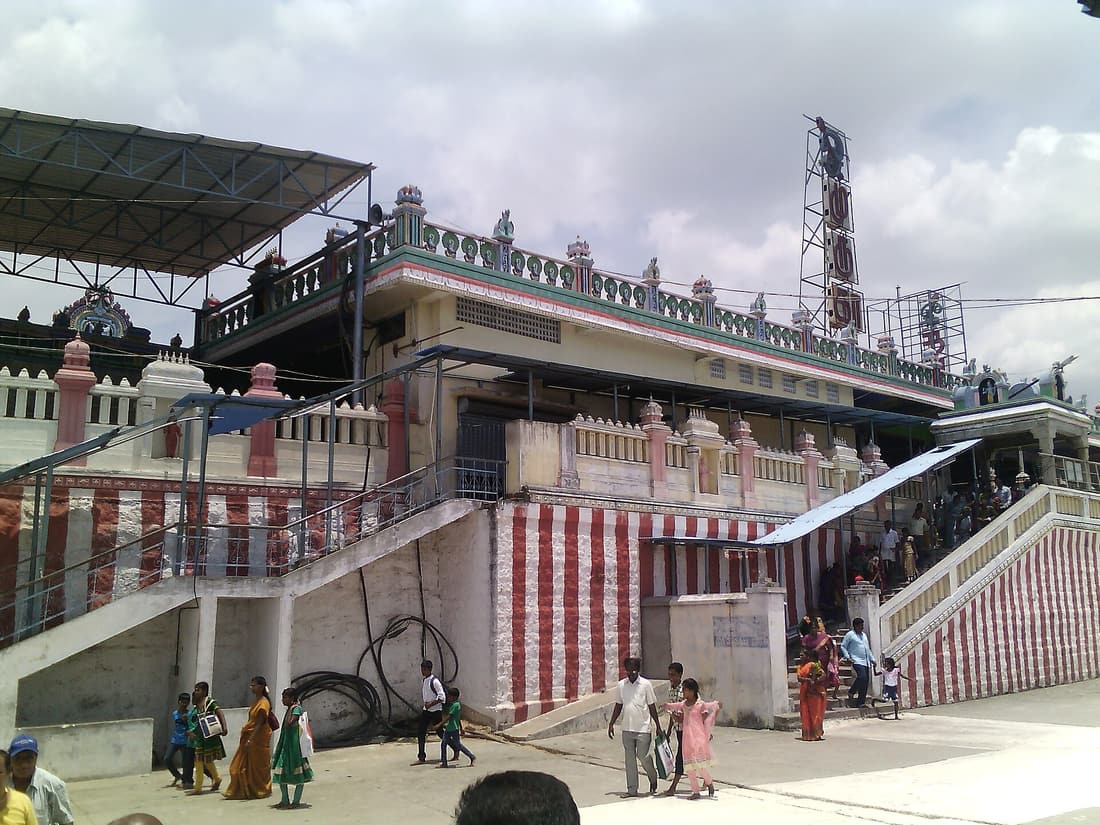
The Subramaniya Swamy Temple at Tiruttani stands on Thanigai hill in Tiruvallur district, about 97 km from Chennai. It is the fifth of the six Arupadai Veedu temples and is mentioned in Sangam literature. The hill is also called Thanigai, and the temple is on the TN Temples Project list as marking Murugan's marriage to Valli.[1][2][4]
The shrine holds Murugan in a standing posture with the left hand on the hip, holding a vajra vel in the right hand, and with a scar on his chest from the war with the asuras. Dinamalar says the left hand on the hip represents Gnana Shakti.[1][2]
The vahana here is an elephant (Airavata), facing east, away from the sanctum. Wikipedia says this iconography is found only at Swamimalai and Tiruttani.[1]
Legends
Cooling his anger
After killing Tarakasura and Simhamukha, Murugan defeated Surapadman in the final battle at Tiruchendur, and then came to Tiruttani to cool down. The name Tiruttani is said to derive from seruttani, from seru (anger) and thani (sating). Dinamalar says the Surasamharam festival is therefore not celebrated here, although Wikipedia also says Murugan is showered with flowers on the Surasamharam day, so the point is flagged.being verified[1][2]
The marriage to Valli
Nambirajan, the chief of the Kuravas, found Valli as a baby among plants and raised her. Murugan took the form of a hunter, and later an aged man, to attract her and married her at Tiruttani. The wedding is celebrated as Valli Kalyanam.[1][2]
Indra's elephant
Indra gifted his white elephant Airavata to Murugan after the war. When the elephant left Indra's realm, the realm declined, so Indra prayed to Murugan and the elephant turned east, toward the heavens, restoring its prosperity. Dinamalar says Indra offered the elephant to Deivanai as a wedding gift.[1][2]
History
Wikipedia has no dedicated history section and mentions no inscriptions or dynasties for this temple. The only dated item is that Arunagirinathar, who composed Tiruppukal hymns including some on this temple, lived in the 14th century CE; a seated statue of him stands in the temple.[1]
Dinamalar says the temple is 1,000-2,000 years old and notes that the hill was once called Siruthani. Padi Puja (worship of the steps) began in 1917, started by the devotee Vallimalai Swamigal.[2]
Architecture and shrines
The hill temple has 365 steps. Before the New Year every step is washed and decorated with turmeric and kumkum, and special pujas are held at midnight. A water body on the hilltop, the Kalhara Theertham, is said to have been created by Indra.[1][2]
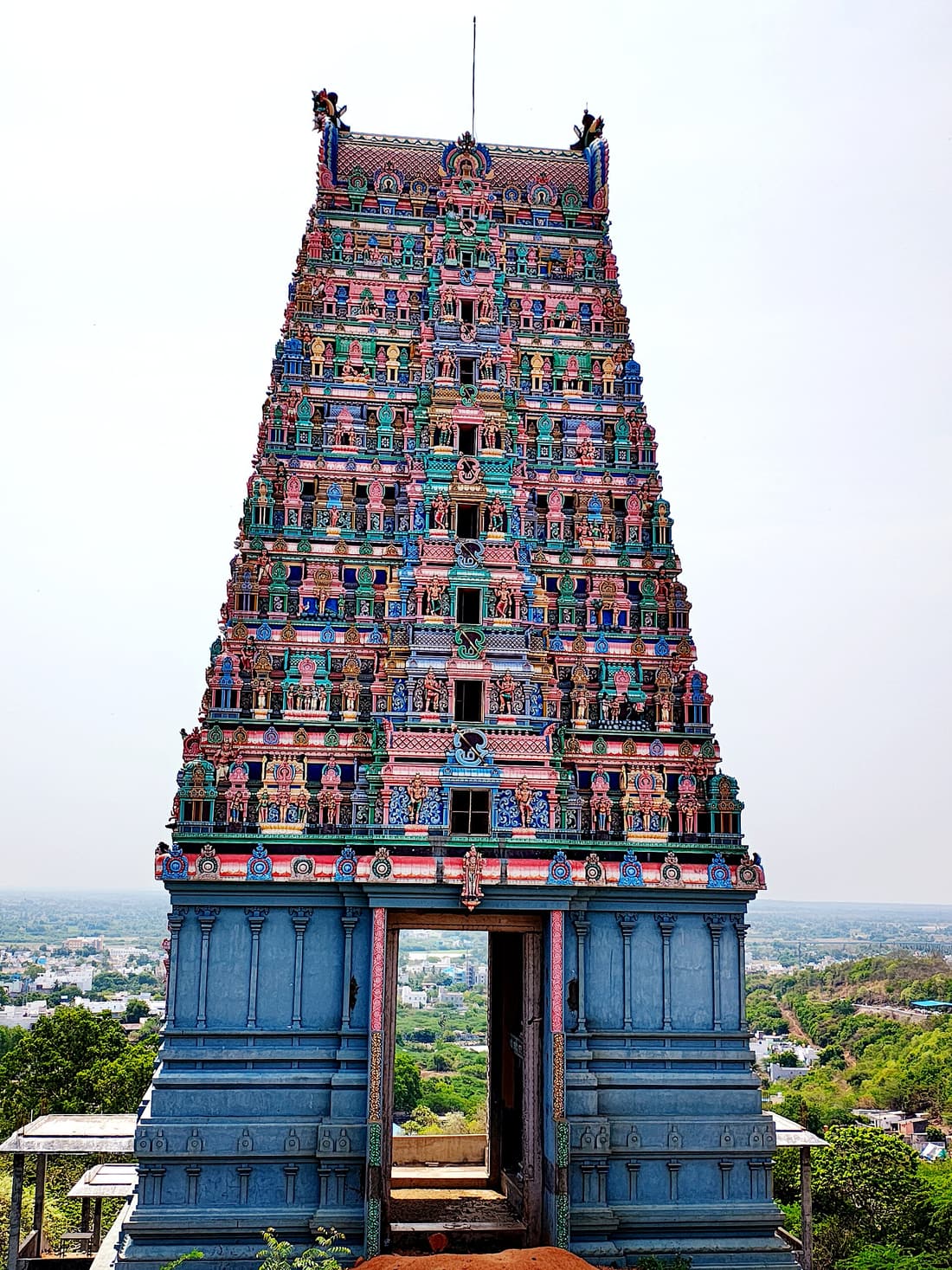
The main gopuram has nine tiers and the temple has four precincts. A six-petalled vimana rises above the sanctum. Vinayaka is shown as Abath Sahaya Vinayaka at the front. Shrines to Deivanai and Valli, Durga and Bhairava (shown holding four dogs, said to represent the four Vedas) are also present.[1]
Dinamalar adds that the procession deity's shrine is in a mandapam made of one lakh Rudrakshas, and that Gajavalli, a form showing Valli and Deivanai together, is shown with a parrot vehicle.[2]
Worship and offerings
- Regular worship includes tonsuring, panchamirtham and milk offerings, kavadi, and sandal paste applied on specific days and then distributed as prasadam. Dinamalar says the sandal paste is dissolved in water and consumed rather than applied to the forehead, and is given only on festival days.[1][2]
- Devotees seek weddings, children, family welfare, prosperity and longevity, and make offerings such as tulabaram (coins equal to one's weight), pongal, ghee lamps, milk pots and feeding the poor.[2]
Hymns
Arunagirinathar composed Tiruppukal hymns, including hymns on this temple. Dinamalar says the temple is also praised in the works of Ramalinga Swamigal and Nakkeerar, and Wikipedia says the Sangam text Tirumurukarruppadai by Nakkeerar mentions it.[1][2]
How to reach
Festivals
Photos
Timings
- 6:00 AM to 9:00 PM continuously — Dinamalar Temples [2]
Frequently asked questions
Why are there 365 steps?
They are said to represent the days of a year. The steps are washed and decorated before the New Year, and a Padi Puja began here in 1917.[1][2]
What is special about Murugan's vahana here?
It is an elephant facing east, away from the sanctum, rather than a peacock. Wikipedia says this is found only at Swamimalai and Tiruttani.[1]
Is Surasamharam celebrated at Tiruttani?
Dinamalar says no. The temple's legend places Murugan here after the Surapadman battle, cooling his anger.[2][1]
What are the timings?
Dinamalar lists 6:00 AM to 9:00 PM continuously. Please confirm locally, since no official timetable was found.[2]
Sources
- Subramaniya Swamy Temple, Tiruttani — WikipediaEncyclopedia (secondary) · accessed 2026-10-31
- Sri Subramaniaswami Temple, Tiruthani — Dinamalar TemplesTemple guide (secondary) · accessed 2026-10-31
- Arupadaiveedu (Six Abodes of Murugan) — WikipediaEncyclopedia (secondary) · accessed 2026-10-31
- Arupadai Veedu temples — TN Temples ProjectTemple database (secondary) · accessed 2026-10-31
Page last checked:
Suggest a correction by email