Overview
The Jurahareswarar temple, also called Jvarahareswara or Suragareswarar, is a Dravidian-style Shiva temple in Kanchipuram. The name comes from Sanskrit jvara (fever), hara (destroy) and ishvara, implying Shiva's power to heal disease. Wikipedia classes it as one of the minor shrines of Kanchipuram.[1]
Legend
The devas were troubled by an asura named Sura and wanted Shiva's help, but feared his anger as he was in penance. They approached Brahma, through whom Shiva opened his third eye and gave fire; its heat gave the devas fever. They prayed, and Shiva appeared as Jurahareswarar. The devas worshipped him here and were purified by the waters of Jurahara Theertham, and with Shiva's help they defeated the demon king.[1]
History and architecture
One view holds that Narasimhavarman II (Rajasimhan, r. 690-725 CE) built it in the early 8th century CE, with later work by the Cholas. Another view dates it to the reign of Kulottunga III (1178-1218 CE), judging from the lower stone portion, with the three-tiered gopuram a later addition.being verified[1]
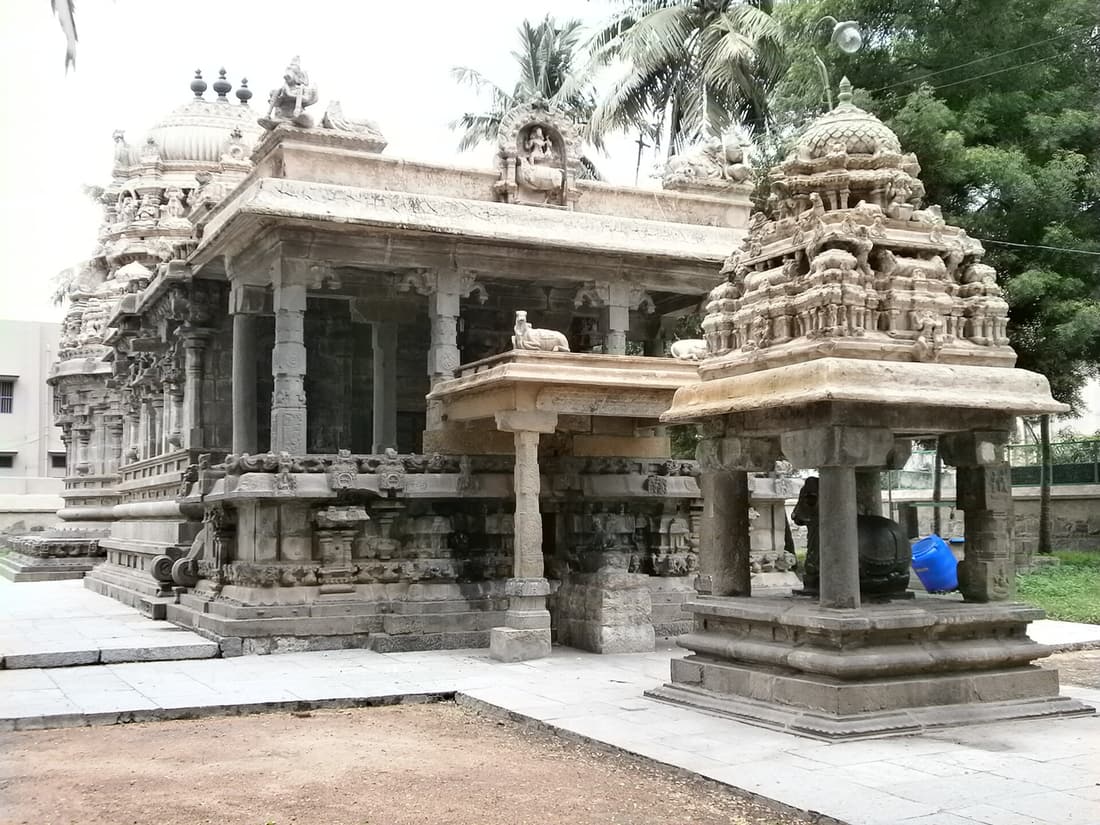
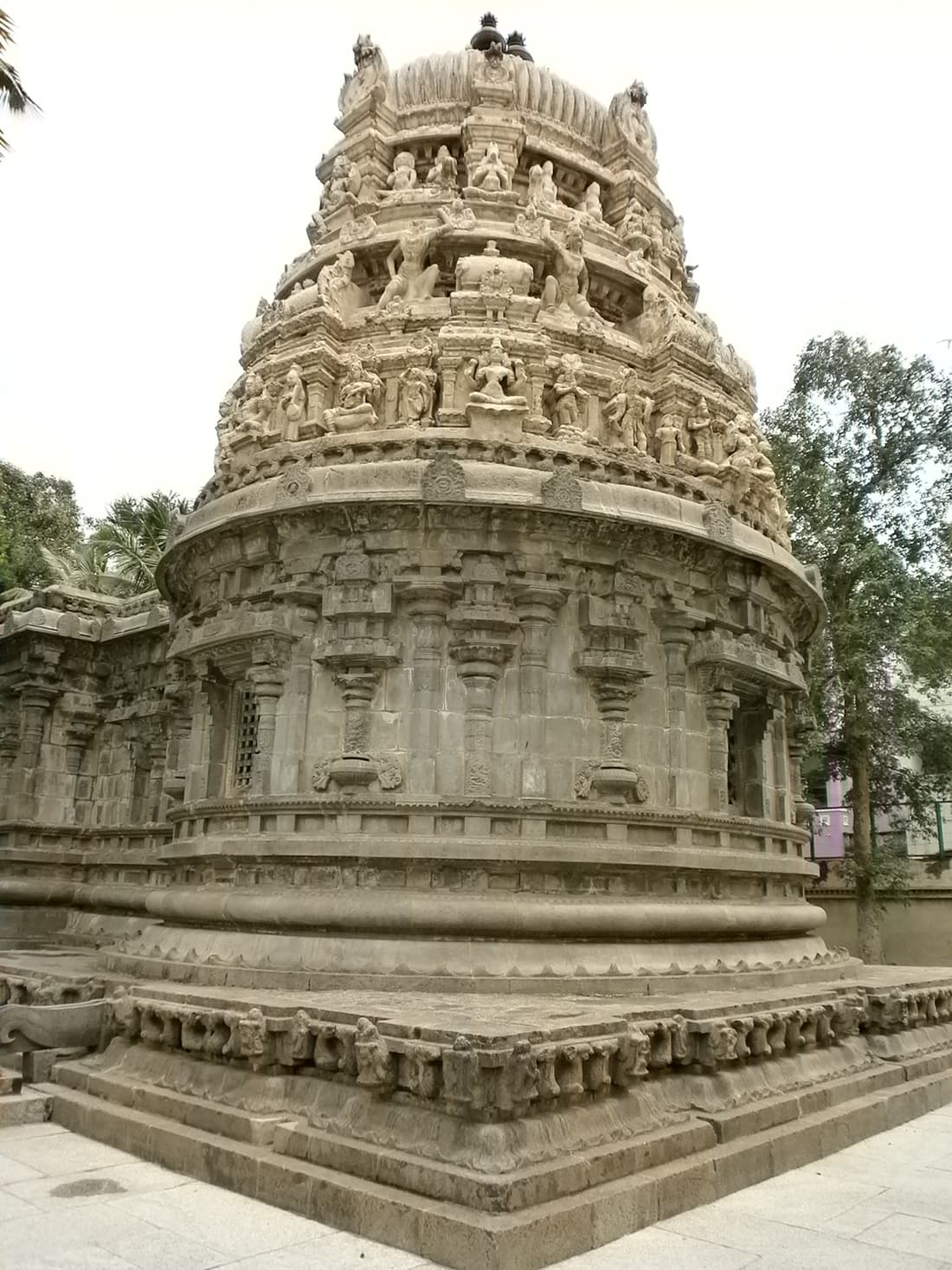
The rectangular temple has a single shrine for Jurahareswarar as a lingam, built on a raised plane. Its semicircular sanctum is described as unique in the region. It has a covered ardhamandapa and a mukhamandapa with eight carved Pallava-style pillars, a small Nandi shrine on the axis of the sanctum and a bali pitham behind it. The vimana has openings on all four sides for ventilation, which Wikipedia says is believed to have curative effects, as at the Srirangam temple.[1]
Practice
The temple tank, Jurahara Theertham, is believed to cure diseases. Like other Shiva temples, it observes weekly Somavaram and Sukravaram, fortnightly pradosham and monthly amavasai, krittikai, pournami and chaturthi. Wikipedia gives two sets of ritual times and two sets of opening hours; they conflict.being verified[1]
Festivals
Photos
Timings
- Open 6 AM to 12 noon and 3 PM to 8:30 PM (lead of the article) — Wikipedia [1]
- Open 6 AM to 11 AM and 4 PM to 8 PM (religious practices section of the same article) — Wikipedia [1]
Frequently asked questions
What does Jurahareswarar mean?
It combines jvara (fever), hara (destroy) and ishvara (Shiva): Shiva as the destroyer of fever.[1]
What is unusual about the sanctum?
It is semicircular, which Wikipedia says is unique in the region.[1]
Who built the temple?
Disputed: Narasimhavarman II in the early 8th century or Kulottunga III in the 12th-13th century.[1]
What are the temple timings?
Two conflicting sets are reported (6-12 and 3-8:30, or 6-11 and 4-8), so confirm with the temple.[1]
Sources
- Jurahareswarar temple, Kanchipuram — WikipediaEncyclopedia (secondary) · accessed 2026-11-01
Page last checked:
Suggest a correction by email