Overview
Tiruvekka, or the Yathothkari Perumal Temple, locally called Sonnavannam Seitha Perumal, is a Dravidian-style Vishnu temple in Kanchipuram and one of the 108 Divya Desams. Vishnu is worshipped as Yathothkari Perumal and his consort as Komalavalli. Wikipedia calls it the second largest temple in south Kanchi after the Varadharaja Perumal temple, and one of the three oldest Vishnu temples in the city, with the Ulagalantha and Pandava Thoothar temples.[1]
The temple is mentioned in the Sangam text Perumpanarruppadai, dated by Wikipedia between 300 BCE and 100 CE, which speaks of Vishnu sleeping on a serpent bed at Thiruvekka. It is believed to have been built by the Pallavas in the late 8th century CE, with later work by the Cholas and Vijayanagara kings.being verified[1]
Legends
After a dispute between Saraswati and Lakshmi over who was greater, Saraswati left Brahma. When Brahma performed an ashvamedha yagna alone, she tried to disrupt it, but Vishnu interposed with the serpent Adishesha and she subsided as the Vegavathi river. The river's name is said to have become Vekka over time, so the deity is also called Vegasetu.[1]
The name Yathothkari, "as requested", comes from the story of Thirumalisai Alvar and his disciple Kanikannan. When a Pallava king ordered Kanikannan banished, Thirumalisai asked the deity to follow them out of Kanchipuram; the city is said to have fallen into darkness until the king asked the three to return, and the deity returned as they requested.[1]
Inscriptions
The temple has 12 inscriptions from the Chola and Vijayanagara periods. A record of Parantaka I (907-950 CE) mentions a gift of 367 kalanju of gold; Rajendra Chola I (1012-44) is recorded giving land and 127 kalanju of gold; Kulottunga Chola I left a gift for lighting lamps; and Kulottunga Chola III recorded a gift of a village to feed 32 Brahmins. Some records also detail the float festival and the summer festival.[1]
Architecture
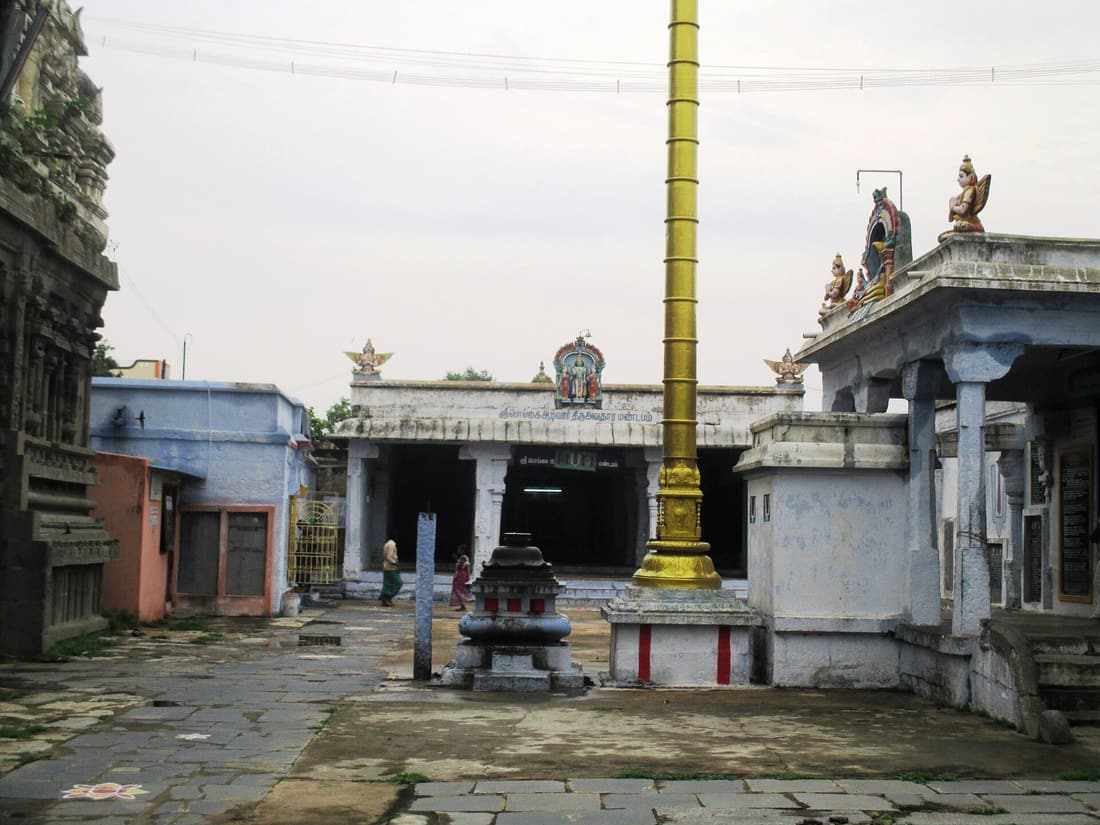
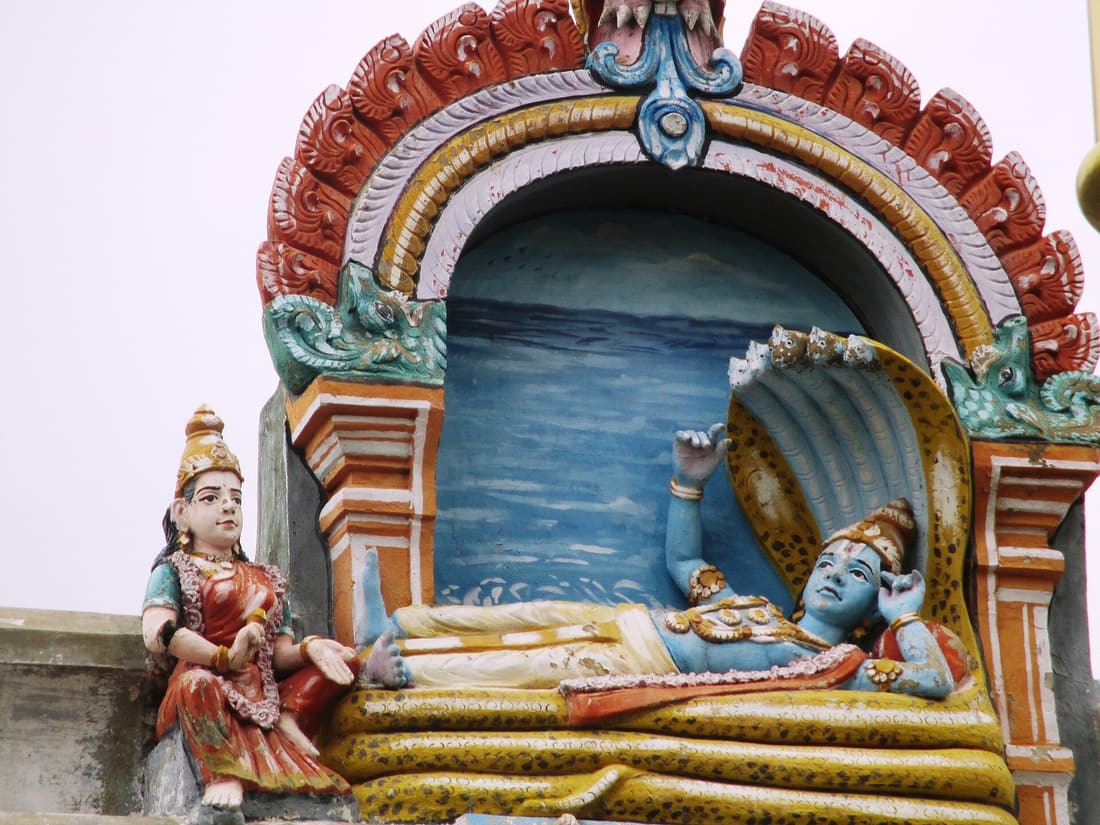
The west-facing sanctum is approached through the flagstaff and pillared halls. The stucco image of the deity is a rare Ranganatha reclining on his left hand. Wikipedia says tradition holds the deity turned from his right side to his left on hearing Thirumalisai Alvar sing. An image of Saraswati prays at his feet. The sanctum roof is the Vedasara Vimana, with five kalasams and stucco figures.[1]
There are separate shrines for Poigai Alvar, Rama with Sita and Hanuman, and Garuda. Komalavalli's shrine faces the central shrine on the east. The lotus tank where Poigai Alvar was found lies outside the main entrance. The Mahamandapa has Vijayanagara-period sculpted pillars. The lead of the article says the rajagopuram has three tiers, while the architecture section says five tiers, so the number is being verified.being verified[1]
Rituals and festivals
Six daily rituals are listed by Wikipedia at 7 AM, 8 AM, 12 noon, 6 PM, 7 PM and 10 PM. The temple follows the Tenkalai tradition. The major festival is the Panguni Brahmotsavam, and Aipassi Thiruvonam, the birth star of Poigai Alvar, is celebrated every year. During Thai Magam the festival images of Yathothkari, Thirumalisai Alvar and Kanikkannan go in procession to Orikkai village.[1]
Festivals
Photos
Timings
- Six daily rituals: 7 AM, 8 AM, 12 noon, 6 PM, 7 PM and 10 PM (ritual times) — Wikipedia [1]
Frequently asked questions
Why is the deity called Yathothkari?
It means "as requested". The deity is said to have followed the wish of his devotee Thirumalisai Alvar.[1]
What is rare about the reclining image?
It is a stucco Ranganatha lying on his left hand, unlike most temples where he lies on his right.[1]
Which Alvar was born here?
Poigai Alvar, one of the first three Alvars, is said to have been found in the temple's pond.[1]
Is it a Divya Desam?
Yes, as Tiruvekka.[1]
Sources
- Yathothkari Perumal Temple — WikipediaEncyclopedia (secondary) · accessed 2026-11-01
Page last checked:
Suggest a correction by email