- Overview
- Legends
- History and inscriptions
- Shrines and sacred features
- Special worship
- Nearby temples
- How to reach
- Festivals
- Photos
- Timings
- Questions
- Sources
Overview
Swetharanyeswarar Temple at Thiruvenkadu is the Navagraha temple of Budha (Mercury). The name Venkadu means white forest, and Swetaranyeswarar is the Sanskrit form (sweta, white; aranya, forest). The presiding deity is a lingam, with his consort Brahmavidyanayaki.[2][1]
It is a Paadal Petra Sthalam and one of the few in which all three of Appar, Sambandar and Sundarar sang. It is also the second of the Pancha Aranya Kshetrams, one of the 51 Shakti Peethams, and one of six Shiva temples on the banks of the Kaveri considered equal to Kasi.[2]
Shiva is present here in three forms: the lingam, Aghora Murti and Natarajar. Because Vishnu is said to have watched Natarajar's tandavam here, the place is also called Aadi Chidambaram. The temple is mentioned in Valmiki's Ramayanam and in the Sangam epic Silappathikaram, which the TN Temples Project cites as a sign of its antiquity.[2]
Legends
Maruthuvasuran and Aghora Murti
Maruthuvasuran, a son of Jalandharan, gained boons from Brahma, troubled the devas, was defeated by Nandi, gained further boons from Shiva, and was finally vanquished by Shiva as Aghora Murti (Veerabhadra) here. Nandi is depicted with nine wounds from the fight. Aghora Murti is the 43rd of the 64 forms of Shiva. The slaying is said to have taken place on a Sunday in the Pooram nakshatra.[2][1]
Budhan
Budhan, the son of Chandra and Tara, was cursed. He worshipped Shiva here and was relieved of the curse, and became one of the Navagrahas. Devotees pray to Budhan for success in education and work.[2][1]
Nine dances and three tanks
Shiva is said to have performed nine tandavams here (Ananda, Tripura, Sandhya, Samhara, Kali, Uma, Siva, Krishna and Gauri) before any other place. Three drops of sweat from his forehead during the dance formed the three tanks.[2]
Sambandar and Pillai Idikki Amman
When Sambandar visited as a child, he found the place filled with lingams and cried out Ammaye. Parvati is said to have carried him in, hence the Pillai Idikki Amman image showing Parvati carrying Sambandar.[2]
Other stories
Shiva saved Swetaketu from Yama here, a story the page compares to Markandeyan at Tirukadaiyur. Brahma regained his Brahma Gnanam after penance, taught by Shiva, and Parvati is called Brahma Vidyambikai. Shiva gave deeksha to Pattinathar here, and Meykandar, the Saiva Siddhanta philosopher and author of Siva Gnana Bodham, was born here. Wikipedia also records that the childless chieftain Achyutha Kalappalar was blessed with Meykandadevar after praying here.[2][1]
History and inscriptions
The original temple is considered a Chola temple, with additions and renovations by the Vijayanagara rulers in the 16th century. Inscriptions refer to the Chola kings Aditya Chola I, Raja Raja Chola I, Rajendra Chola I and Kulothunga Chola I, who contributed to the temple, and others refer to the Pandyas and the Vijayanagara dynasty.[2][1]
Shrines and sacred features
- Natarajar shrine, with a Chidambaram-style gold-plated roof similar to Kerala ambalams, and a Vishnu shrine near it.[2]
- Aghora Veerabhadra, in a separate shrine with a very tall ardha mandapam.[2]
- Budhan sannidhi in the north-western part of the temple near the Chandra Teertham, easier to reach from the western entrance.[2]
- Vallabha Ganapati with Siddhi, in a shrine resembling a traditional house; the TN Temples Project says it is in fact a granary. Sambanda Vinayakar stands near Koopittaan Kulam, where Sambandar called out.[2]
- Rudra Padham, a footprint of Shiva under a large peepul tree near the Chandra Teertham. Performing ceremonies for the departed there is considered very special, and bathing in the Manikarnika river is said to equal 64 baths at Kasi.[2]
- Wikipedia names Swetharanyeswarar, Aghora and Nataraja as the most prominent shrines, with others for Budha, Vishnu, Durga, Kali and Pillai Idikki Amman.[1]
Special worship
A special Aghora puja is held at midnight on the third Sunday of Karthigai (November-December), described as extremely auspicious. Worship of Aghora Murti at midnight on Sundays is a special event for devotees.[2]
Nearby temples
- The other Pancha Aranya Kshetrams: Thalachangadu (Sankaaranyeswarar), Sayavanam (Chayavaneswarar), Pallavaneswaram at Poompuhar (Pallavaneswarar) and Keezh Tirukattupalli (Aranyeswarar).[2]
- Tiruchengattankudi (Uthira Pasupateeswarar), where Siruthondar Nayanar and Tiruvenkattu Nangaiyar attained mukti.[2]
How to reach
Festivals
Photos
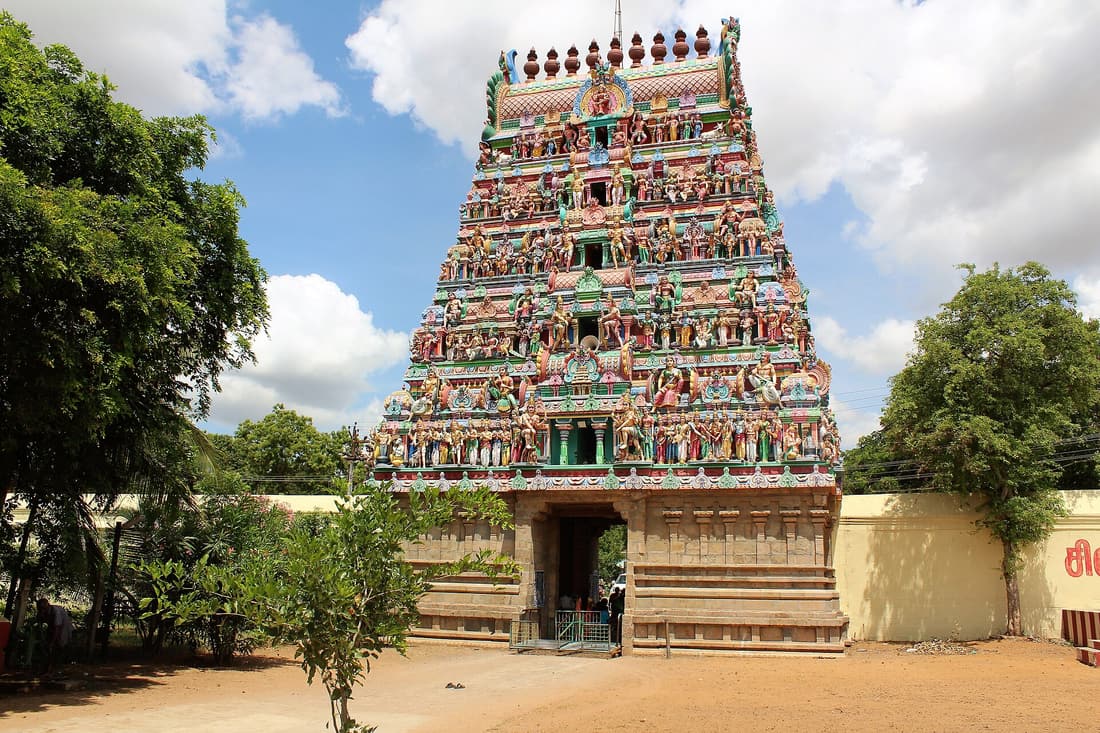
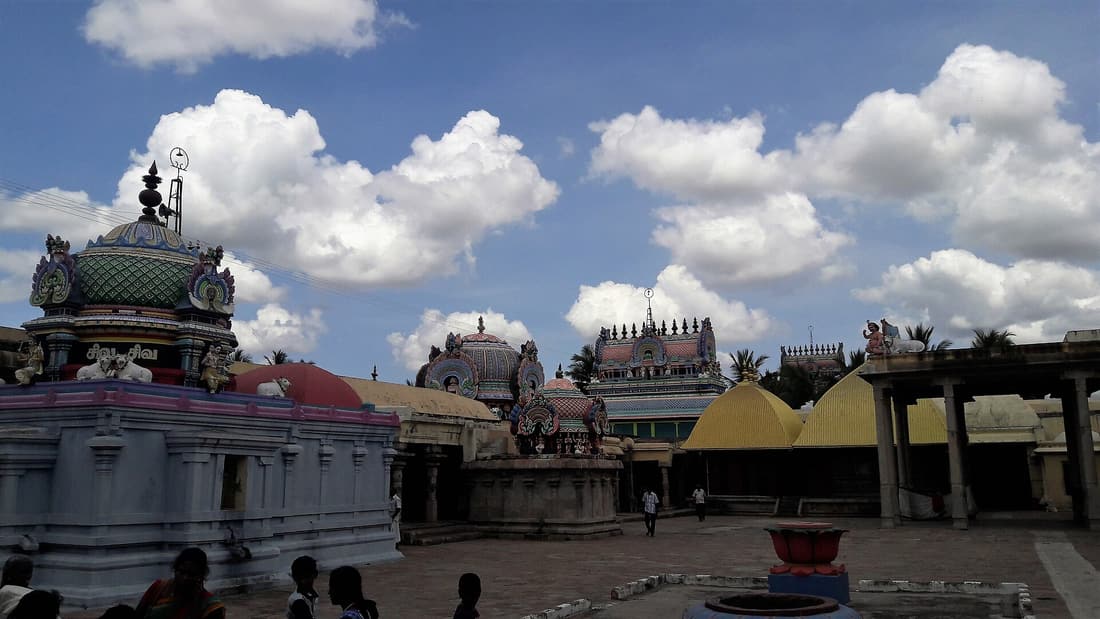
Timings
- 6:00 to 12:00 and 5:00 to 9:00 — TN Temples Project [2]
Frequently asked questions
Why is Thiruvenkadu called Aadi Chidambaram?
Shiva is said to have performed nine tandavams here before any other place, and Vishnu is said to have watched the Natarajar's dance here.[2]
Which planet is worshipped here?
Budha (Mercury). The Budha shrine is in the north-western part of the temple.[2][1]
What are the three tanks?
Surya, Chandra and Agni teerthams, said to have formed from three drops of Shiva's sweat during his dance.[2]
Who sang the Tevaram here?
Appar, Sambandar and Sundarar all sang here, which is rare, and Manikkavasagar also sang.[2]
Who was born at Thiruvenkadu?
Meykandar, the Saiva Siddhanta philosopher and author of Siva Gnana Bodham, was born here, according to the TN Temples Project.[2]
Sources
- Swetharanyeswarar Temple — WikipediaEncyclopedia (secondary) · accessed 2026-10-31
- Swetaranyeswarar, Tiruvenkadu, Nagapattinam — TN Temples ProjectTemple database (secondary) · accessed 2026-10-31
Page last checked:
Suggest a correction by email